
Tag:engineering

Feb 2, 2017

Dynamics of the Unconscious Brain Under General Anesthesia

MIT professor of medical engineering and computational neurosciences Emery Brown will lead a discussion called “The Dynamics of the Unconscious Brain Under General Anesthesia" on Thursday, Feb. 9, at the Duke Energy Hall at Hunt图书馆。

Jan 31, 2017

Paper Spotlights Key Flaw in Widely Used Radioisotope Dating Technique

An oversight in a radioisotope dating technique used to date everything from meteorites to geologic samples means that scientists have likely overestimated the age of manysamples.

Jan 30, 2017

Researchers Develop Wearable, Low-Cost Sensor to Measure Skin Hydration

数控状态researchers have developed a wearable, wireless sensor that can monitor a person’s skin hydration for use in applications that need to detect dehydration before it poses a healthproblem.

Jan 19, 2017

Advanced Biomass Cookstoves Provide Benefits in Field Settings, But Less than Expected from Lab Testing

Researchers find that while advanced wood-burning cookstoves can provide benefits to the environment, the benefits are less than expected due to higher emissions measured in the field compared to laboratorysettings.

Dec 12, 2016

数控状态Hosts NSF Big Data Research Center

数控状态University has been selected as a new site of the existing Center for Hybrid Multicore ProductivityResearch.

Dec 1, 2016

New Findings Boost Promise of Molybdenum Sulfide for Hydrogen Catalysis

研究人员发现,硫化钼(密苏里州S2) holds more promise than previously thought as a catalyst for producing hydrogen to use as a clean energy source. Specifically, the researchers found that the entire surface of MoS2 can be used as a catalyst, not just the edges of thematerial.

Nov 28, 2016

Smart Patch Releases Blood Thinners As Needed, Prevents Thrombosis in Animal Model

A new smart patch that releases blood thinners as needed successfully prevents thrombosis in animalmodels.

Nov 17, 2016

Tech Would Use Drones and Insect Biobots to Map Disaster Areas

数控状态researchers have developed a combination of software and hardware that will allow them to use unmanned aerial vehicles and insect cyborgs, or biobots, to map large, unfamiliar areas – such as collapsed buildings after adisaster.

Nov 16, 2016

An Efficient Approach for Tracking Physical Activity with Wearable Health-Monitoring Devices
Researchers from North Carolina State University have developed an energy-efficient technique for accurately tracking a user’s physical activity based on data from wearabledevices.

Nov 9, 2016

New ‘Bottlebrush’ Electroactive Polymers Make Dielectric Elastomers Increasingly Viable for Use in Devices

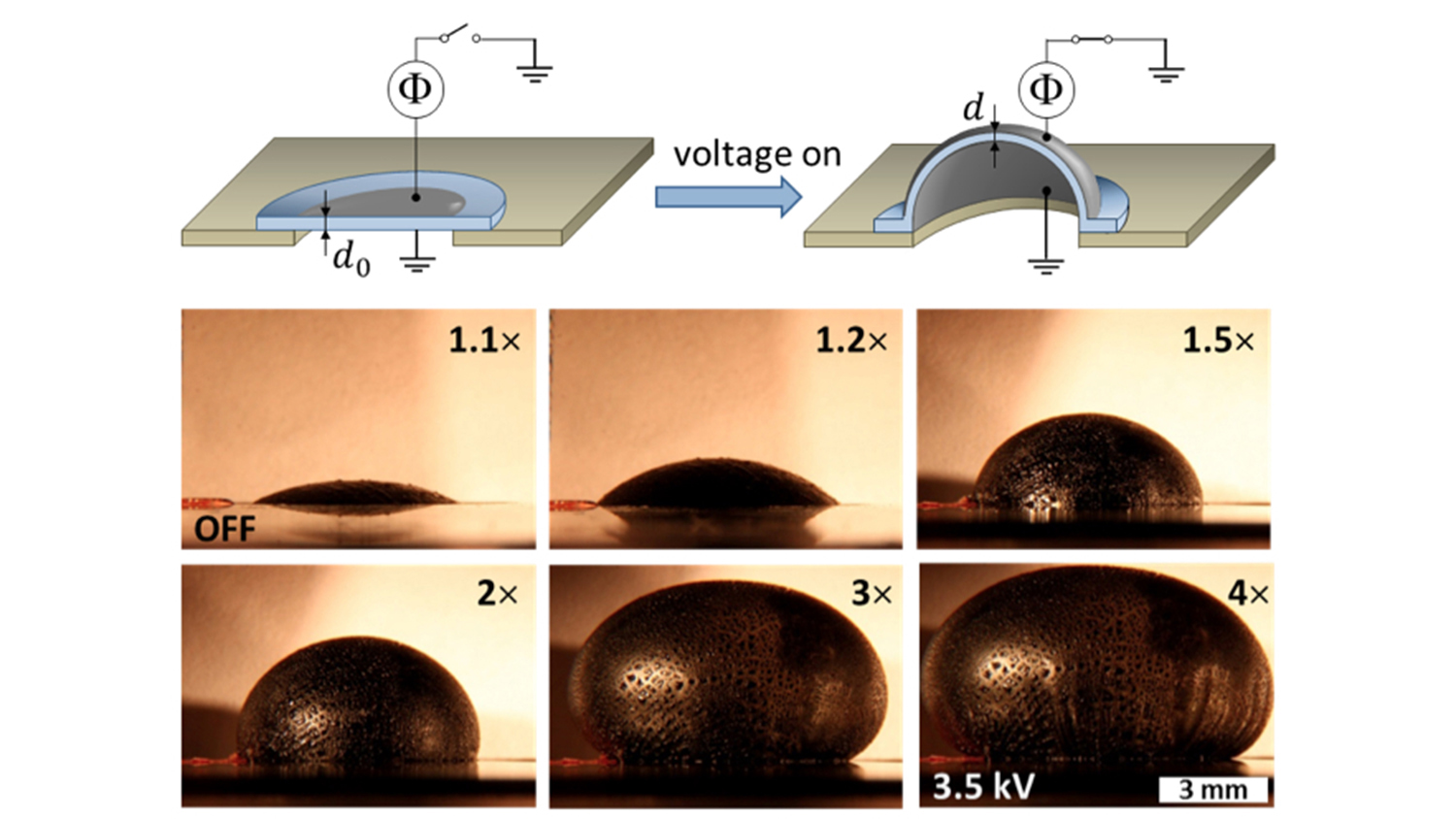
A new electroactive polymer can change shape and size when exposed to a relatively small electric field. The advance overcomes longstanding challenges regarding the use of electroactive polymers to develop new devices, opening the door to a suite of applications ranging from microrobotics to designertechnologies.

Nov 2, 2016

新技术佛r Creating NV-Doped Nanodiamonds May Be Boost for Quantum Computing

数控状态researchers have developed a new technique for creating NV-doped single-crystal nanodiamonds, which could serve as components in quantum computingtechnologies.

Nov 1, 2016

New Tech Uses Electricity to Track Water, ID Potential Problems in Concrete

Researchers have developed a new technique for tracking water in concrete structures – allowing engineers to identify potential issues before they become bigproblems.

Oct 21, 2016

Researchers Find Way to Tune Thermal Conductivity of 2-D Materials

Researchers have found an unexpected way to control the thermal conductivity of two-dimensional materials, which will allow electronics designers to dissipate heat in electronic devices that use thesematerials.

Oct 14, 2016

Study Finds Surface Texture of Gallium Nitride Affects Cell Behavior

Researchers at North Carolina State University have determined that the surface texture of gallium nitride materials can influence the health of nearbycells.

Oct 10, 2016

‘Sensing Skin’ Detects Cracks, Harmful Chemicals in Structures

Researchers have developed a multi-layered “sensing skin” to detect corrosive or otherwise harmful substances in structures. The skin can also detect cracks and other structural flaws that are invisible to the nakedeye.