
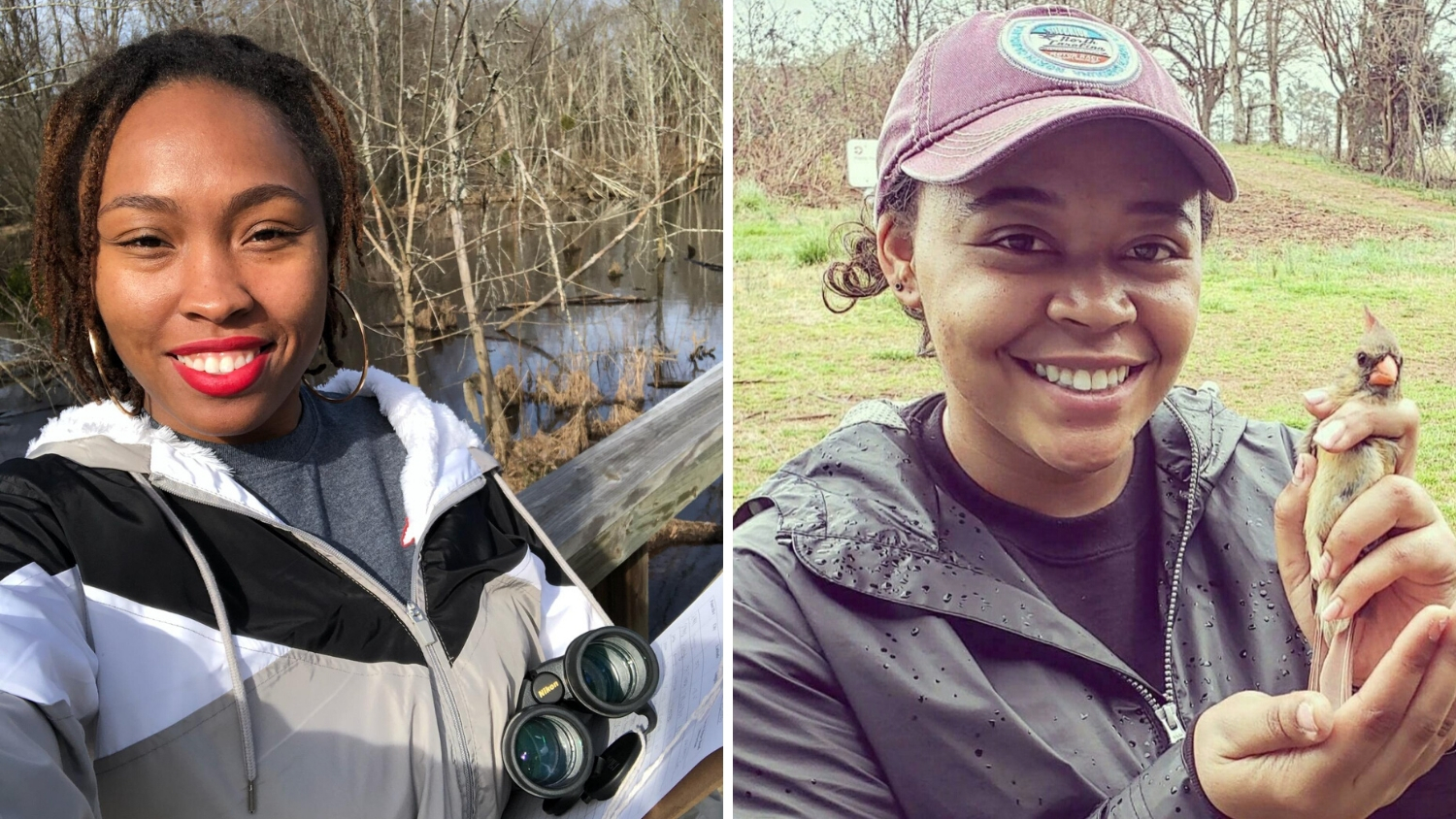
Editor’s note: This is a guest piece written by Deja Perkins and Lauren Pharr, master’s students in Fisheries, Wildlife and Conservation Biology in NC State’s College of Natural Resources.
The Global Impact
Deja Perkins:《黑鸟周》(Black Birders Week)不仅强调了黑人观鸟者,而且还强调了黑人户外爱好者,博物学家和保护主义者。我是一组20名年轻STEM专业人士的一员,他们认为足够了。我们选择利用克里斯蒂安·库珀(Christian Cooper)发生的事件来强调这样一个事实,即种族主义也存在于科学和环境领域。
Many of us realized that what happened to Christian could have happened to any of us, whether we are working in rural or urban areas. It was important to the group that we not only highlight the fact that Black people exist in outdoor spaces, but also highlight our experiences in the outdoors and create discussion around the incident and how to move forward into the future to make the outdoors less hostile and more inviting space for people of color, specifically Black, Indigenous, People of Color (BIPOC).
I have been extremely excited about the amount of people who participated in Black Birders Week and the change that it has sparked in many organizations.
#BecauseofBlackBirdersWeek, Black people have seen themselves represented in the outdoors, many individuals were able to connect and now have a broader network for support, the山茱萸l Lab of Ornithology发布2个初学者观鸟课程免费National Wildlife Federationcreated internships/fellowships specifically for Black biologists, and many other wonderful opportunities and partnerships have been blossoming after the Black Birders Week social media event.
The Personal Impact
Perkins:I am happy to be a part of the team that helped spark change in the outdoor community and to have cultivated the livestream event which had over 104k views in each session. The amount of positive feedback from the week’s events was heartwarming, and I think it really brought people together.
It not only highlighted the struggle of Black people in outdoor settings and our struggle with racism in America, but also shined some positivity in an otherwise dark time. Due to this event, I was able to find a network of individuals who look like me and enjoy the outdoors. I was shocked to find out how many Black people were also birders, since prior to this event I only knew six other Black birders and only two were in my same state. It’s encouraging to know that I am not alone, and reaffirms that I do belong in this field.
The visibility provided the larger organizations and institutions the opportunity to see that racism exists everywhere, even in science, academia, and the outdoors. It challenged those with power to not only speak up and support their employees or consumers who are Black, but also take an active role in being anti-racist and make changes within their institutions to support BIPOC and make the workplace and outdoors less hostile.
Lauren Pharr:作为我的日常挑战和活动的参与者,对我来说,黑鸟周的一周击中了两件事之一:1)引起人们对黑人观鸟者的关注和意识,对他们在户外和休闲区的经历,而2)不仅展示黑人,不仅展示黑人野生动植物生物学,生态学,自然资源等领域,但在这些领域的其他少数民族也是如此。
直到本周,当我听到《黑鸟周》和《黑人黑人》的共同组织者的众多故事和证词时,关于进行野外工作或“黑人时”,我忽略了在娱乐领域的有色人种可能发生的事情或我们如何可能会被感知。
Right now, you may be wondering, “But Lauren, you are a person of color?” Growing up I have always been around a diverse race of people and friends, from elementary school straight through undergrad. I was aware of the issues about white supremacy and Blacks being underrepresented all my life, however, I was never really truly exposed to the real and countless issues of Black in STEM or minorities in STEM until I came to NC State University. Again, I sincerely thank Black Birders Week for truly opening my eyes. When you hear about others’ experiences, that’s when it all becomes a reality. Now, I am more aware.
About Us
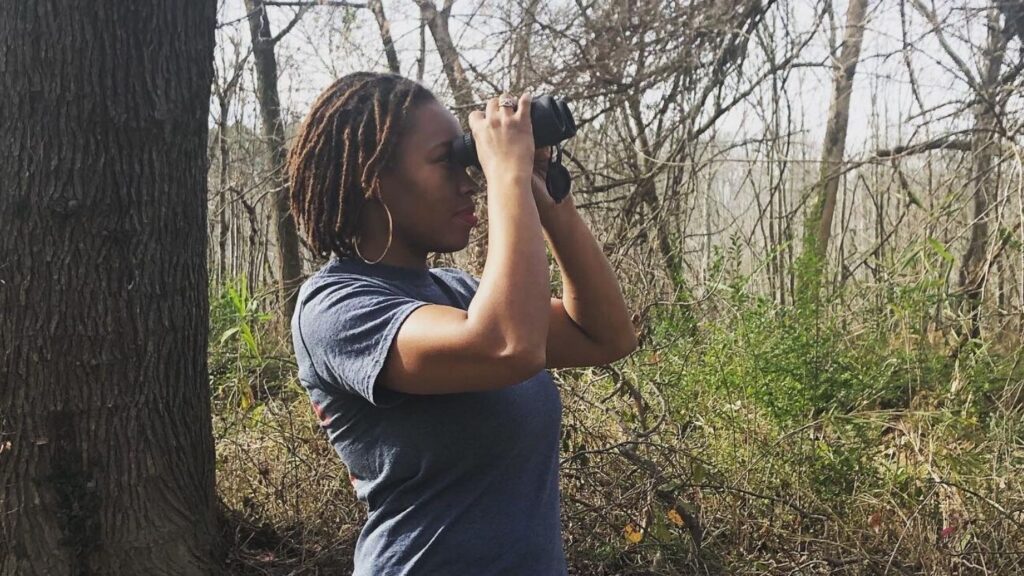
Perkins:I first got into natural resources as a part of a program called Fishin Buddies as a teen in Chicago. I always loved animals, but I had no idea that there were agencies that managed wildlife and their habitat or that I could have a career doing just that.
I originally went to Tuskegee University to start on the path to become a veterinarian, which is often the only animal-related career introduced to POC, but I shortly realized that natural resources was the path for me. I realized I was much more interested in how people impact the environment and the many issues arising from the intersection of natural resources and race.
After interning at a wildlife refuge in Minnesota and experiencing a small taste of spring migration, my eyes were opened to the world of birds. I decided to try to pursue every opportunity to make birds my focal species. Now I am studying how birds are impacted by human culture in cities (socio-ecological systems).
In the spring I conduct 10-minute surveys recording all birds I can ID by sight and sound. In the fall/winter I use GIS to map where birds are reported with eBird and systematic surveys to see if there are gaps in where birds are being reported in the city due to volunteer bias.
Aside from bird watching for my project, birding is also a way for me to de-stress from academia. I find joy in following a bird with my binoculars and observing its behavior. Birds are present in cities year-round. It’s interesting to observe the changes in bird diversity not only through the seasons but also as cities change.
I hope to continue studying how human behavior impacts birds in cities as well as how to make nature in cities more sustainable, and equitable, in a way that benefits both people and wildlife.
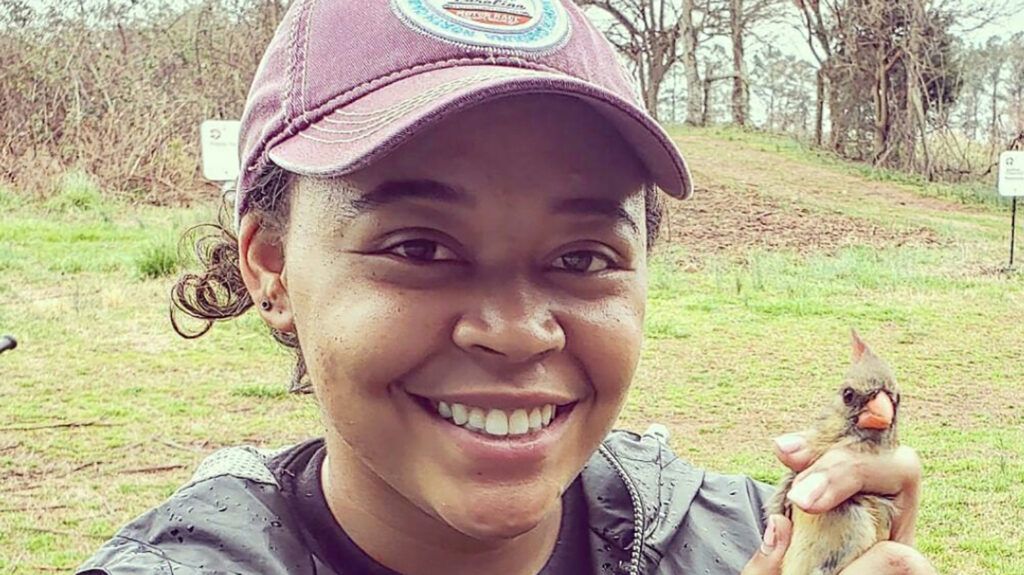
Pharr:My uncle was your average birder. Just the enjoyment of birding in his own backyard brought him joy and peace. In my younger days, I would call him on the phone while I pulled out my field guide and would flip through it; whatever page I decided to stop at I would ask him if he had seen that particular bird in his yard that day. This was a joy for me as it was for him, and I would have never thought in a million years that today I would be such a bird fanatic.
Growing up, my goal was to become a vet. Sure I would see TV Shows like Animal Planet or the Crocodile Hunter, but I never thought that those types of experiences with wild animals could ever be a reality. It wasn’t until I attended Wingate University in Undergrad that I would find my true passion for research, wildlife, and birds.
我需要信用两个本科生研究副词isors: Dr. Alison Brown, who taught me the true passion and joy in conducting research, and Dr. Edward Mills, who introduced me to ornithology as well as many other aspects of wildlife biology through the courses that he taught. I gained research experience and the opportunity to work with various species of animals including Sheep and Chinese Blue-breasted Quail. I also got the experience of presenting my work publicly at professional science conferences.
After undergrad, I made it a goal of mine to pursue my master’s in the wildlife biology field. Now I am here at NC State University pursuing my Master’s in Fisheries, Wildlife, and Conservation Biology. I made it my objective to continue my passion for ornithological research in order to broaden and strengthen my knowledge in the field.
Under my research advisor Dr. Caren Cooper and partnering with Neighborhood Nestwatch out of the Smithsonian National Museum of Natural History in Washington, DC, I am currently researching the effects of urbanization on avian morphology to see whether urbanization has led to specific changes across an urbanization gradient, over years, or throughout species in the Washington-Maryland area.
From my time so far at NC State, I have gained tons of new research experiences and passions: learning how to mist net and band songbirds as well as diving deep into science communication. Upon completing my master’s, I plan on pursuing my Ph.D. in Fisheries, Wildlife, and Conservation Biology. My long-term goal is to one day obtain a position with either the US Fish and Wildlife Service or the North Carolina Wildlife Resource Commission.
这篇文章是originally publishedin College of Natural Resources News.
- Categories:


What a wonderful way to take action and get into nature! I’m an avid birder myself and it’s so nice to see more young women and people of color get into birding for ALL the reasons!