
Audio Abstract

NC State’s research podcast. You can subscribe to Audio Abstract withApple Podcasts,Soundcloudorother podcasting appsof your choice.

Sep 15, 2016

New Tech Promises to Boost Electric Vehicle Efficiency, Range

NC State researchers have developed a new type of inverter device with greater efficiency in a smaller, lighter package – which should improve the fuel-efficiency and range of hybrid and electricvehicles.

Sep 12, 2016

Lightweight, Wearable Tech Efficiently Converts Body Heat to Electricity

NC State researchers have developed a new design for harvesting body heat and converting it into electricity for use in wearable electronics. The experimental prototypes are lightweight, conform to the shape of the body, and can generate far more electricity than previous lightweight heat harvestingtechnologies.

Sep 8, 2016

Simulation Highlights Potential For Low-Cost Security Imaging Device

NC State researchers have used computer models to demonstrate the viability of a low-cost security imaging device that makes use of inexpensive radio components. Functional prototypes are under development and would be orders of magnitude less expensive than existing imagingdevices.

Sep 6, 2016

Researchers Use Hardware to Accelerate Core-to-Core On-Chip Communication
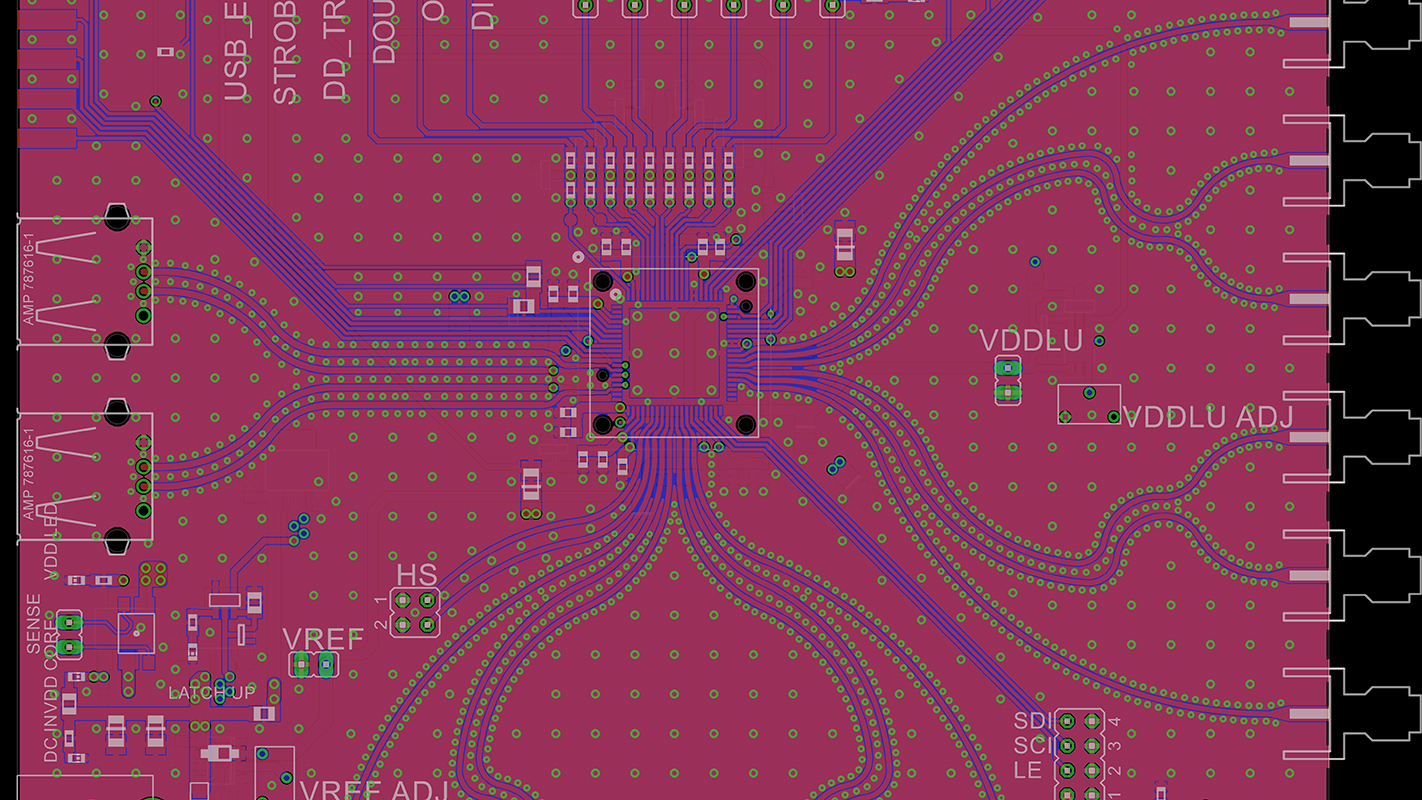
Researchers from NC State and the Intel Corporation have developed a new way to significantly accelerate core-to-core communication. Their advance relies on hardware to coordinate efforts between cores for multiprocessoroperations.

Aug 2, 2016

NC State to Form NSF-Funded Center for Advanced Electronics Through Machine Learning With UIUC and Georgia Tech

The new center will speed up the design and verification of microelectronic circuits and systems, reducing development costs and time-to-market for manufacturers of microelectronic products, especially integratedcircuits.

foraminifera viewed through a microscope

Jul 5, 2016

How Teaching Robots to Identify Microscopic Fossils Could Help Us Understand Oceans

An unlikely partnership is attempting to solve a tricky engineering challenge and advance our understanding of Earth’soceans.

Jun 27, 2016

研究者戴维se Tool to Improve Imaging of Neuronal Activity in the Brain

In a partnership melding neuroscience and electrical engineering, researchers have developed a new technology that will allow neuroscientists to capture images of the brain almost 10 times larger than previouslypossible.

2016年6月24日

研究者戴维se New Tool to Measure Polarization of Light

NC State researchers have developed a new tool for detecting and measuring the polarization of light based on a single spatial sampling of the light, rather than the multiple samples required by previoustechnologies.

Jun 20, 2016

New Technique Improves Accuracy of Computer Vision Technologies

NC State researchers have developed a new technique that improves the ability of computer vision technologies to better identify and separate objects in an image, a process calledsegmentation.

Jun 1, 2016

New Devices, Wearable System Aim to Predict, Prevent Asthma Attacks

NC State researchers have developed an integrated, wearable system that monitors a user’s environment, heart rate and other physical attributes with the goal of predicting and preventing asthma attacks. The researchers plan to begin testing the system on a larger subject population thissummer.

May 9, 2016

New Techniques Make RFID Tags 25 Percent Smaller

NC State researchers have developed a suite of techniques that allow them to create passive radio-frequency identification tags that are 25 percent smaller – and therefore lessexpensive.

Dog-Sitting-Training

May 2, 2016

New Tech Uses Hardware, Software to Train Dogs More Efficiently

NC State researchers have developed and used a customized suite of technologies that allows a computer to train a dog autonomously, with the computer effectively responding to the dog based on the dog’s bodylanguage.

Apr 20, 2016

Model Makes Designing New Antennas Orders of Magnitude Faster

研究人员开发了一个模型that allows antenna designers to identify efficient configurations for antenna designs in minutes, rather than days. The model is designed to expedite development of next generation “multi-input, multi-ouput” antennas, which allow devices to get more use out of the availablebandwidth.

Mar 18, 2016

Recreating the Web of Blood Vessels That Keep Human Tissue Alive

For years, one of the largest obstacles facing the field of regenerative medicine was the need to create a circulatory system to support new tissues and organs as they grew. Now two researchers are being recognized for creating technology to make the customized blood vessels necessary to support tissuegeneration.

Feb 18, 2016

Algorithm Makes Hyperspectral Imaging Faster

Researchers from North Carolina State University and the University of Delaware have developed an algorithm that can quickly and accurately reconstruct hyperspectral images using less data. The images are created using instruments that capture hyperspectral information succinctly, and the combination of algorithm and hardware makes it possible to acquire hyperspectral images in less time and to store those images using lessmemory.