
Wearable Health Tech Gets Efficiency Upgrade
即时发布
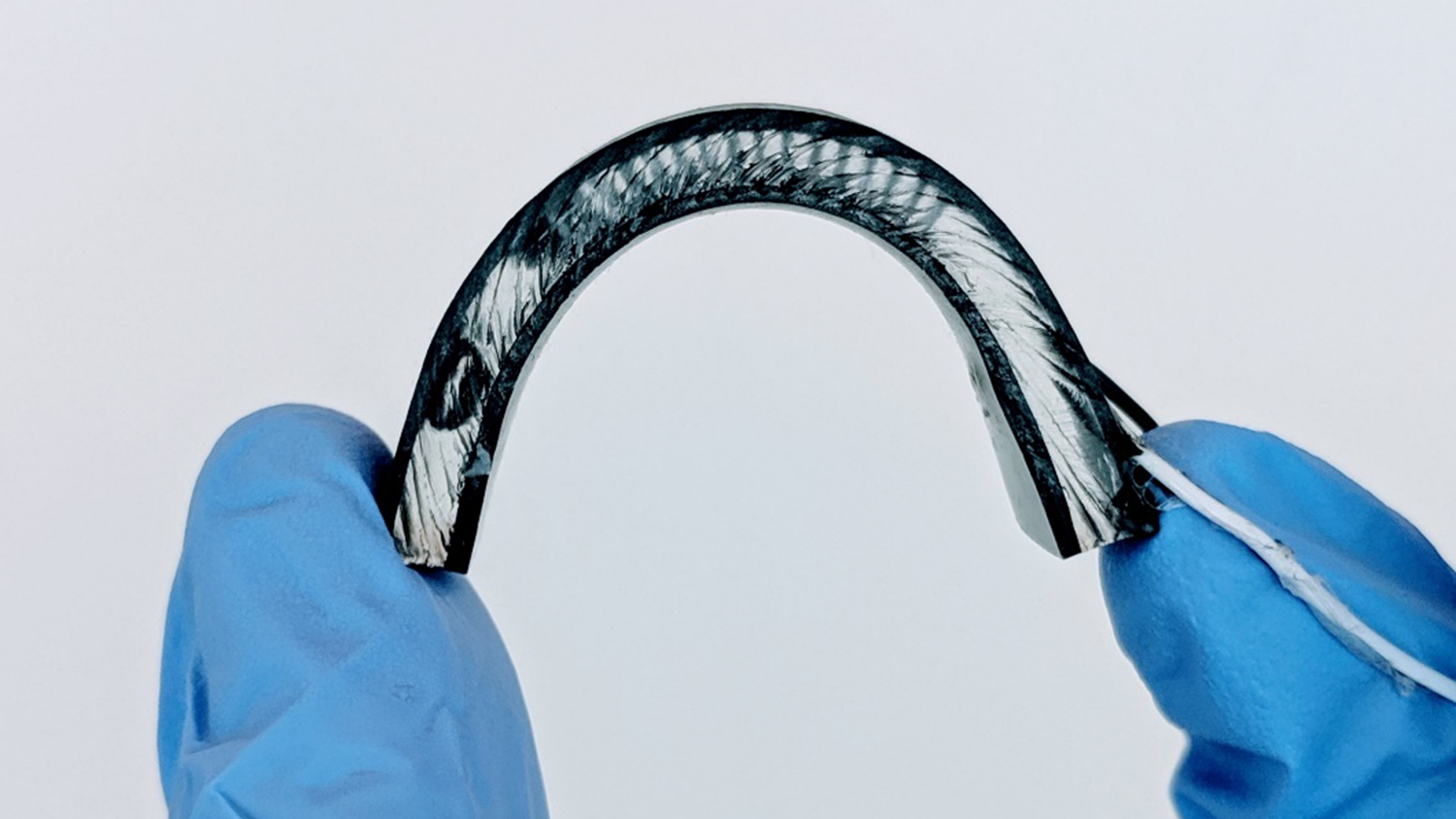
北卡罗来纳州立大学的工程师已经展示了一种灵活的装置,可从人体中收获热能以监测健康。该设备超过了所有使用人体热量作为唯一能源的柔性收割机。
在一个发表的论文应用能量,北卡罗来纳州研究人员报告了对柔性身体热收割机的显着增强功能first reported in 2017. The harvesters use heat energy from the human body to power wearable technologies – think of smart watches that measure your heart rate, blood oxygen, glucose and other health parameters – that never need to have their batteries recharged. The technology relies on the same principles governing rigid thermoelectric harvesters that convert heat to electrical energy.
Flexible harvesters that conform to the human body are highly desired for use with wearable technologies. Mehmet Ozturk, an NC State professor of electrical and computer engineering and corresponding author of the paper, mentioned superior skin contact with flexible devices, as well as the ergonomic and comfort considerations to the device wearer, as the core reasons behind building flexible thermoelectric generators, or TEGs.
The performance and efficiency of flexible harvesters, however, currently trail well behind rigid devices, which have been superior in their ability to convert body heat into usable energy.
Ozturk说:“本文报告的灵活装置明显优于迄今为止报告的其他灵活设备,并且正在接近刚性设备的效率,这非常令人鼓舞。”
最初在2017年报道的概念证明使用了半导体元件,这些元件是使用由egain制成的液体 - 金属互连(一种无毒合金)的凝胶和鉴赏菌的串联连接的。Egain提供了金属样电导率和可伸缩性。整个设备嵌入了可拉伸的硅酮弹性体中。
升级的设备采用相同的架构,但它显着改善了先前版本的热工程,同时增加了负责将热量转换为电能的半导体元件的密度。改进之一是改进的硅酮弹性体(本质上是一种橡胶),它封装了Egain互连。
Ozturk说:“这里的关键是使用高温电导率硅酮弹性体掺有石墨烯片和Egain。”弹性体提供了针对穿刺的机械鲁棒性,同时改善了设备的性能。
他说:“使用这种弹性体使我们能够提高导热率(传热速率),从而可以改善侧向热量扩散。”
Ozturk补充说,该技术的优势之一是,它消除了设备制造商开发新的灵活的热电材料的需求,因为它结合了刚性设备中使用的非常相同的半导体元件。Ozturk表示,未来的工作将集中在进一步提高这些灵活设备的效率上。
Yasaman Sargolzaeiaval,Viswanath P. Ramesh,Taylor V. Neumann,Veena Misra,Michael Dickey和Daryoosh Vashaee共同撰写了该论文。该小组还拥有该技术的最新专利。
Funding for the work comes from the NC State’s National Science Foundation-funded Advanced Self-Powered Systems of Integrated Sensors and Technologies (ASSIST) Center under grant EEC1160483. The mission of the ASSIST Center is to create self-powered wearables capable of long-term multi-modal sensing without having to replace or charge the batteries.
-Kulikowski -
注释编辑:随后是论文的摘要。
“用于人体热收集的柔性热电发生器 - 使用高导热率弹性体封装在液体金属互连上增强的设备性能”
Authors:Yasaman Sargolzaeiaval,Viswanath P. Ramesh,Taylor V. Neumann,Veena Misra,Daryoosh Vashaee,Michael D. Dickey和Mehmet C. Ozturk,北卡罗来纳州立大学
Published: Jan. 30, 2020, online in应用能量
doi: 10.1016/j.apenergy.2019.114370
抽象的:本文报告情况灵活热电ators (TEGs) employing eutectic gallium indium (EGaIn) liquid metal interconnects encased in a novel, high thermal conductivity (HTC) elastomer. These TEGs are part of a broader effort to harvest thermal energy from the body and convert it into electrical energy to power wearable electronics. The flexible TEGs reported in this paper employ the same thermoelectric ’legs’ used in rigid TEGs, thus eliminating the need to develop new materials specifically for flexible TEGs that often sacrifice the so-called ’figure of merit’ for flexibility. Flexible TEGs reported here embed rigid thermoelectric ’legs’ in soft and flexible packaging, using stretchable EGaIn interconnects. The use of liquid metal interconnects provides ultimate stretchability and low electrical resistance between the thermoelectric legs. The liquid metal lines are encased in a new stretchable silicone elastomer doped with both graphene nano-platelets and EGaIn to increase its thermal conductivity. This high thermal conductivity elastomer not only reduces the parasitic thermal resistance of the encapsulation layer but it also serves as a heat spreader, leading to 1.7X improvement in the output power density of TEGs compared to devices fabricated with a conventional elastomer. The device performance is further improved by a thin Cu layer acting as a heat spreader providing an additional 1.3X enhancement in the output power at 1.2 m/s air velocity (typical walking speed). Worn on the wrist, our best devices achieve power levels in excess of 30 ?W/cm2 at an air velocity of 1.2 m/s outperforming previously reported flexible TEGs.


Great work here! Just a small issue – please correct the ‘?’ sign in power value (last sentence), so following research can possibly adjust its constraints