For Immediate Release
北卡罗来纳州立大学的研究人员发现,在粉丝园栖息地靠近Collinator栖息地的大豆作物比没有种植在Collinator栖息地附近的大豆作物的大豆。
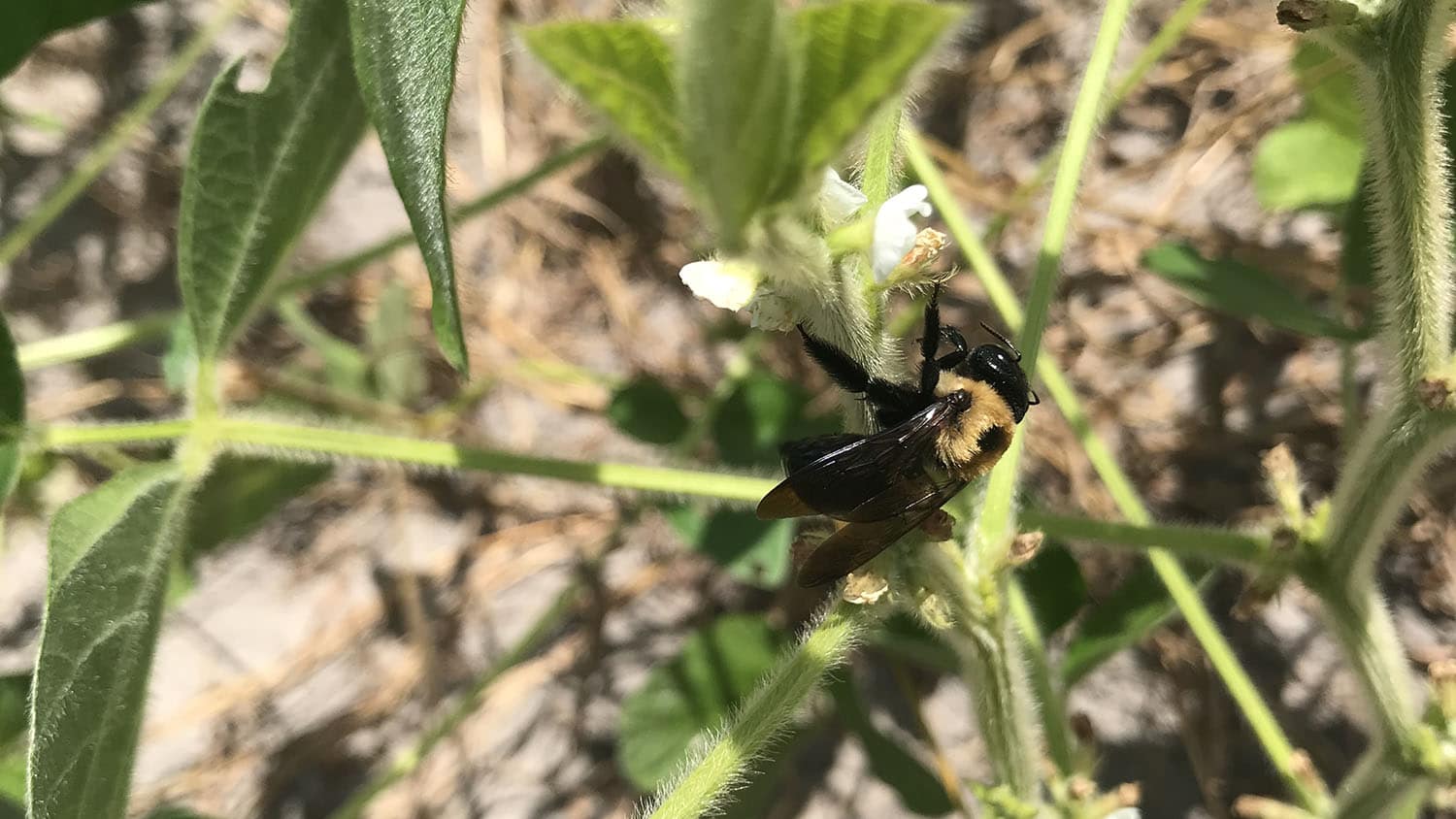
“Even though soybeans are not thought of as being dependent on pollinators, we found that soybean plants are still attractive to bees,” says Hannah Levenson, a postdoctoral research scholar at NC State and corresponding author of a paper on the work. “And we found that the presence of pollinators was associated with larger soybeans.
Levenson说:“在农作物田地靠近作物田地的栖息地有很多工作可能会影响被认为是普及者或草莓等人物。”“但是对庄稼没有考虑过抚养师的作物一直相对较少。我们想知道大豆田地靠近大豆的垃圾植物栖息地会影响大豆的蜜蜂种类和作物产量。“
研究人员选择专注于大豆,因为它们是几十个州种植的经济上重要的作物。
对于研究,研究人员在北卡罗来纳州的八个研究站工作。在每个车站,研究人员评估了两个大豆领域:一个与Collinator栖息地的成熟区域相邻的大豆,以及尽可能远的人 - 通常只是在一公里的地方。
The pollinator habitat was created by planting wildflower seed mixes in unused land near fields. The habitat could be grown in areas that aren’t amenable to crop cultivation, or on land that can be used to grow crops but had not been cultivated that season due to crop rotation or other factors.
To assess impact on bees, the researchers did two things. First, they surveyed bee communities in both soybean fields and the pollinator habitat at each research station. The surveys consisted of a detailed visual assessment to establish the overall abundance of bees, as well as which species were present at each location. The researchers also collected samples of individual bees to confirm their identifications.
The research team also collected pollen samples from three of the most common bee species, allowing them to determine which plants the bees were visiting.
“从调查中,我们发现撒普拉森栖息地的蜜蜂群落与遥远大豆田的蜜蜂社区完全不同,”莱维森说。“邻近粉丝群栖息地的大豆田间的蜜蜂群落是一种混合物,包括两组的两组元素。栖息地相邻的领域与遥远的大豆领域相当相似,但是蜜蜂社区被附近的粉底园栖息地受到影响。“
“From the pollen samples, we learned that all of the bees we found in any of the soybean fields were actively visiting soybean flowers,” says April Sharp, co-author of the paper and a graduate student at NC State who worked on the project as an undergraduate. “The evidence suggests that some of the bees in the pollinator habitat itself were also visiting the soybean flowers, though that was less pronounced.”
The researchers also found that bees in the soybean fields located far from pollinator habitats were often leaving the soybean fields to visit flowers completely outside of the study area. Bees in soybean fields that were adjacent to the pollinator habitat were less likely to leave the study area.
“这表明,在大豆领域的蜜蜂中有大豆栖息地的拥有普及者的栖息地有利于蜜蜂。”
To assess the impact on crop yields, researchers collected 30 soybean plants from each of the fields at harvesting time. They then counted the number of seeds – or soybeans – per pod, the total number of seeds per plant, and the weight of those seeds.
“我们发现种子的数量类似于Collinator栖息地和遥远的领域附近的领域,”Levenson说。“然而,邻近Tollinator栖息地的植物产生的种子比远距离植物的种子重6.5%。”
“That’s a substantial difference in the size of soybeans,” says David Tarpy, co-author of the paper and a professor of applied ecology at NC State. “Given that soybean farmers sell their crop by weight, it could make a meaningful difference in a grower’s profit margin.”
“Our findings are very applicable for soybean growers across the Southeast,” Levenson says. “Other regions, such as the Midwest, have different cropping systems, so it’s not clear the extent to which these findings would apply there – that’s an interesting area for future study. This work also raises questions about the role that pollinators might play in affecting other crops that aren’t considered pollinator dependent. That’s another area that is worth exploring.”
The paper, “评估粉碎机栖息地对大豆作物蜂探视和产量指标的影响,“发表在期刊上Agriculture, Ecosystems & Environment. The work was done with support from the North Carolina Department of Agriculture & Consumer Services, the Syngenta Pollinator and IPM Stewardship program, and Southern SARE, under grant number GS19-215.
-shipman-
Note to Editors:这项研究摘要跟随。
“评估Collinator栖息地增加对大豆作物蜜蜂探视和产量指标的影响”
作者: Hannah K. Levenson, April E. Sharp and David R. Tarpy, North Carolina State University
发表: Feb. 17,Agriculture, Ecosystems & Environment
DOI: 10.1016/j.agee.2022.107901
Abstract:农业强化在减少全球生物多样性的情况下,农业强化具有显着改变的生态系统功能。虽然农业需要增加对动物授粉的依赖,但粉丝犬种群已拒绝。为了打击这一点,将粉丝员栖息地添加到农业景观中越来越普遍,但许多问题仍然是其功能和对农业系统的影响,特别是在粉丝簇独立的作物中。我们的研究采用粉刷栖栖息地在美国东南部的实验研究站上种植,评估了对附近的种植系统(大豆)内的粉碎机社区的影响和所得产量。我们发现栖息地的Collinator社区的物种组成明显不同于大豆的社区。即使仍然,我们鉴定了迄今为止培养大豆花的30多种物种,并核实这些物种的子集积极收集大豆花粉。来自栖息地邻近栖息地种植的大豆田的蜜蜂有更多存在的栖息地花粉类型,而某些物种在阴性控制位点时具有更多的非栖息地类型。栖息地的存在对邻近大豆位点的一些产量测量平均每株植物具有6.52%的种子。这些调查结果表明,传粉别墅栖息地可以是支持粉刷者的重要资源,并突出了考虑粉丝员栖息地在普拉兰的作物中的重要性,因为它们仍可能受益于抚摸者社区的吸引力。